
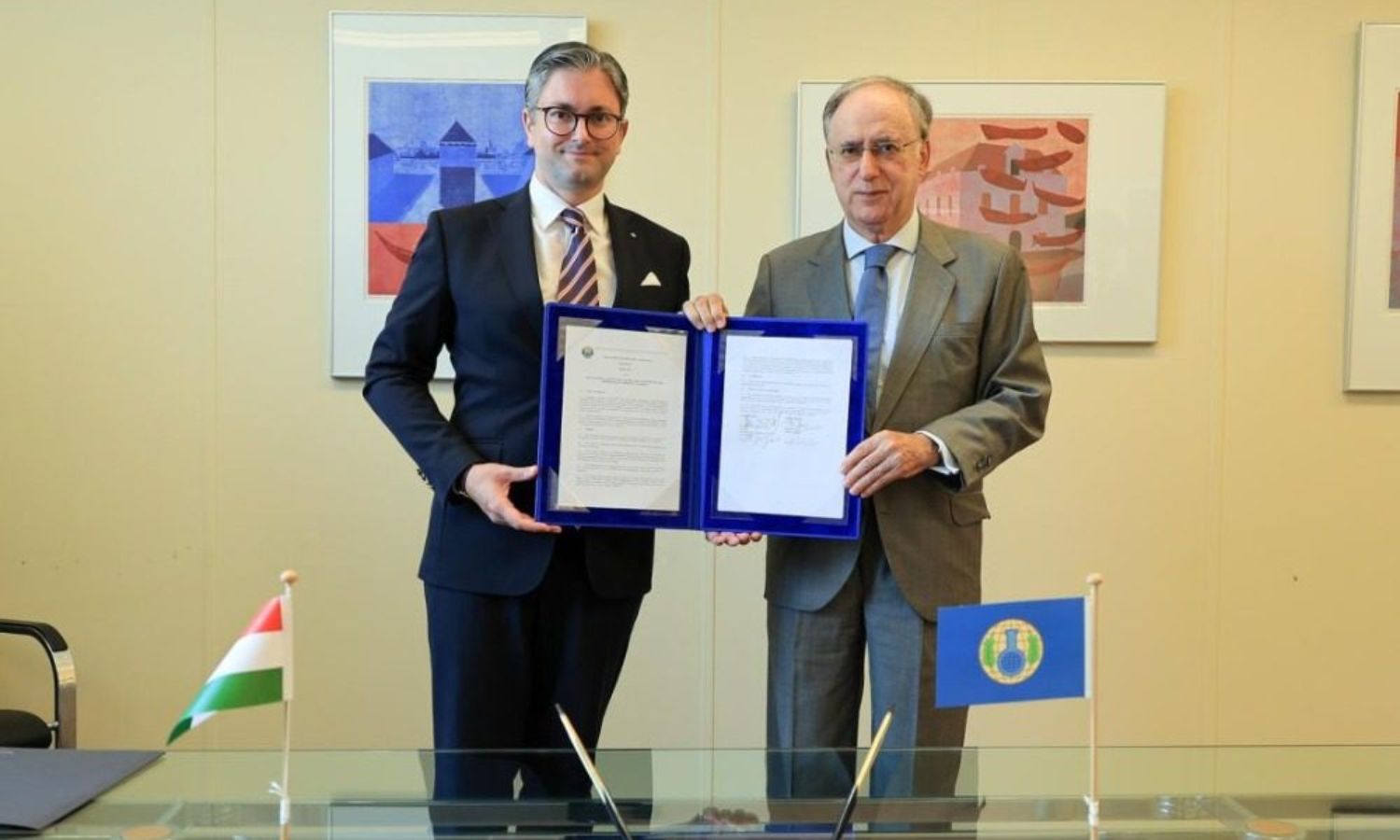
The Organisation for the Prohibition of Chemical Weapons (OPCW) announced that Hungary has provided a grant to the organization’s trust funds to support its missions and training programs in Syria, reaffirming its ongoing commitment to the objectives of the Chemical Weapons Convention.
In a statement published on its official website, Wednesday, 30 July, the OPCW explained that Hungary will contribute €50,000 to support its activities in Syria, including training on chemical weapons handling and prevention, as well as youth-targeted awareness programs.
The amount will be divided into three parts:
-
€30,000 to the Trust Fund for Syria Missions, to support the OPCW’s efforts to fully clarify and resolve outstanding issues related to Syria’s chemical weapons program.
-
€10,000 to the Trust Fund for Implementation Support, for capacity-building initiatives, including regional assistance and protection training courses.
-
€10,000 to the Trust Fund for Training, designated for the OPCW’s education and training program aimed at young people, promoting the peaceful uses of chemistry, according to the statement.
Dániel Horogházi Szilágyi Landek, Hungary’s Permanent Representative to the OPCW, said, “The international community and the OPCW must seize this opportunity to completely eliminate Syria’s chemical weapons, and this is why Hungary made a voluntary contribution to the Trust Fund for Syria Missions.”
Hungary supports the continued implementation and potential expansion of OPCW’s cooperation and international assistance programs. It wishes to actively contribute to the work of the OPCW and remains a committed State Party, according to Landek.
Fernando Arias, the OPCW Director-General, welcomed Hungary’s contribution, noting that it supports many of the organization’s core operational areas and helps clarify the outstanding aspects of Syria’s chemical weapons program.
Arias added that this contribution also enhances the organization’s ability to build practical assistance and protection capacities at the regional level, while also investing in educating and raising awareness among younger generations.
On 11 July, the OPCW praised Syria’s effective cooperation with the organization’s Technical Secretariat, including facilitating field deployments, providing logistical support, and contributing to the development of joint implementation plans. This took place during Syria’s participation in the Ninth Session of the Executive Council.
Previously, Vladimir Tarabrin, Russia’s Ambassador to the Netherlands and Permanent Representative to the OPCW, told the Russian news agency TASS that the Syrian chemical weapons file had “seen a new development following the arrival of the transitional government to power in Syria.”
Tarabrin mentioned that an OPCW team is preparing to begin work in Syria, following discussions between the OPCW Director-General and the Interim Government in Damascus.
Hungary has been a State Party to the Chemical Weapons Convention since it entered into force in 1997 and has remained an active member ever since.
Hungary has also contributed a total of €89,410 to OPCW trust funds, including previous support to the Assistance Trust Fund and the ChemTech Centre Trust Fund.
The post Hungarian Grant to Support Chemical Weapons Ban in Syria appeared first on Enab Baladi.