
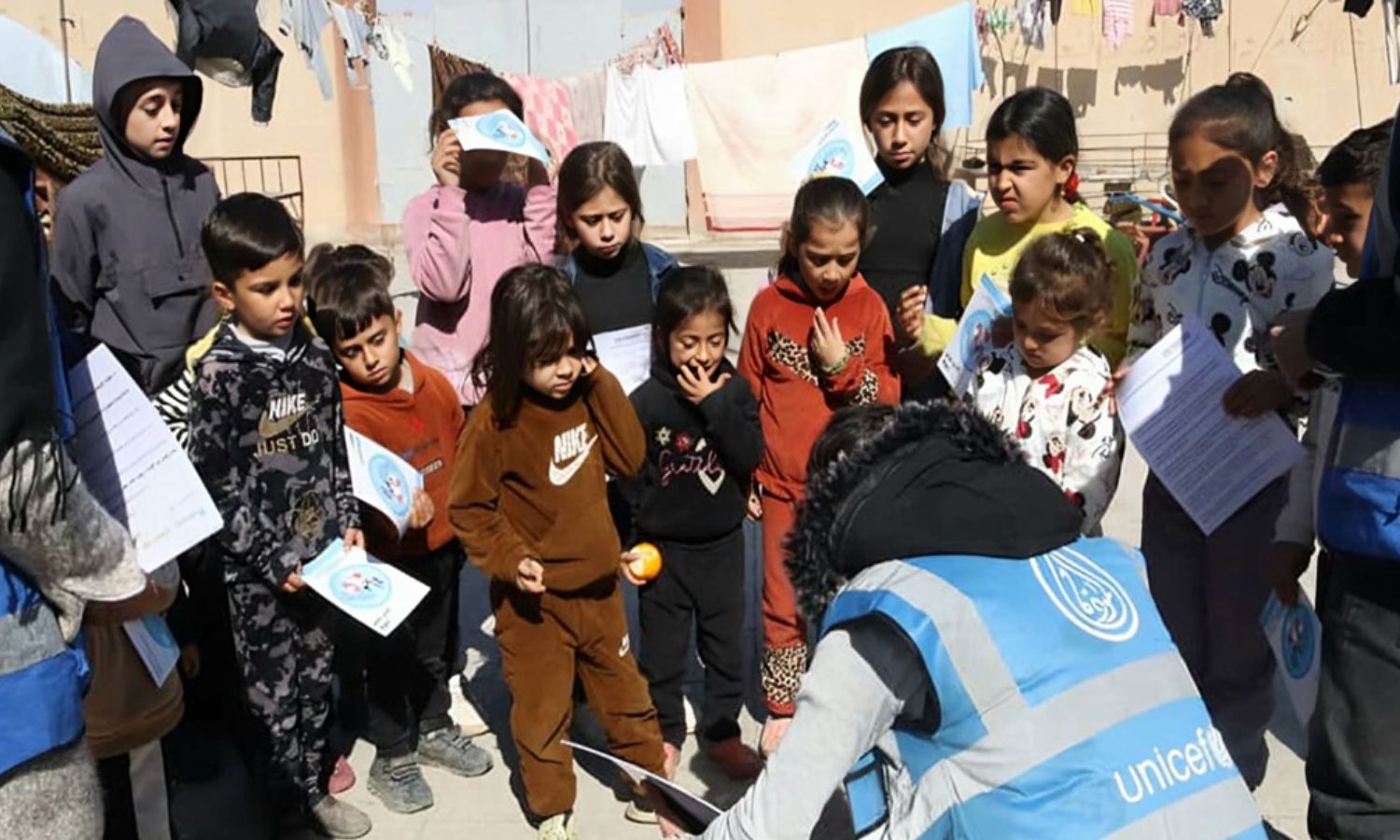
The United Nations Children’s Fund (UNICEF) stated that 1.6 million internally displaced Syrians have returned to their original areas since November 2024, 52% of them children, increasing the need for services. The organization noted that the ongoing conflict, landmines, drought, and economic deterioration are exacerbating the situation, particularly in northeastern and southern Syria.
In its mid-year humanitarian situation report for Syria, released on Sunday, 3 August, UNICEF reported that 16.5 million people in Syria need humanitarian assistance, including 7.4 million children.
The organization also stated that more than 600,000 children under the age of five suffer from acute malnutrition, 177,000 of whom are experiencing severe wasting.
The report confirmed that Syria is experiencing its worst drought in 36 years, leading to a drop in wheat production and the disruption of water supplies.
Health Services
According to the report, UNICEF’s health services in the first half of this year included:
-
1.2 million free medical consultations, including 104,281 for displaced persons and returnees.
-
A national immunization campaign reaching 1.77 million children.
-
Training for 747 healthcare workers in neonatal and maternal care.
Nutrition Services
UNICEF’s nutritional interventions included:
-
Treating 4,229 children for severe wasting.
-
Providing preventive services (nutritional supplements and awareness) to over 500,000 children and 370,000 caregivers.
-
Distributing nutritional cash assistance to 6,000 families at risk of malnutrition.
Child Protection
In terms of child protection, UNICEF:
-
Provided protection services to over 647,000 people, including 537,000 children.
-
Reached 472,736 children and caregivers with mine risk education.
-
Provided psychosocial support to 53,616 children.
Education
UNICEF supported the education sector by:
-
Supporting the education of 536,691 children through safe learning environments and the distribution of supplies.
-
For the first time in 10 years, 61,066 students in the north were able to take exams locally.
-
Training 24,707 teachers in psychosocial support and teaching skills.
Water, Sanitation, and Hygiene (WASH)
The organization supported this sector by:
-
Delivering water to 14 million people, including through the rehabilitation of water and sewage networks.
-
Implementing projects in Aleppo, Latakia, Tartus, Homs, Daraa, Damascus, and other areas.
-
Providing 3,200 tons of sodium hypochlorite to disinfect water.
Social Protection
In this sector, the report noted that UNICEF provided:
-
Direct cash support to over 18,000 people (returnees and IDPs).
-
Support to 4,160 children with disabilities through cash assistance and case management.
-
Support for the development of a national social protection system, in cooperation with the government and the World Bank.
Youth Engagement
UNICEF also reported:
-
Involving 158,796 youth in volunteer, educational, and community activities.
-
Training 46,428 adolescents in life and employment skills.
-
Enabling 22,573 youth to report sexual exploitation through safe channels.
Communication and Behavior Change
Efforts in this area included:
-
Reaching two million people with life-saving information (health, nutrition, protection).
-
Implementing awareness campaigns against diseases, promoting education, and encouraging vaccination.
Funding and Risks
Regarding funding and risks, the report stated:
-
Of the required $488 million, only 25% has been funded.
-
The largest shortfalls are in education (82%), social protection (82%), WASH (79%), and nutrition (56%).
The report warned that limited funding poses a serious threat to the continuation of life-saving services in Syria, as millions of children face poverty, hunger, and displacement amid a volatile and complex environment.
16 Million in Need of Health Support
On 10 May, Dr. Tedros Adhanom Ghebreyesus, Director-General of the World Health Organization (WHO), stated on X that approximately 16 million people in Syria urgently need health support.
He noted that, thanks to a $3 million contribution from the UN Central Emergency Response Fund (CERF), the WHO was able to expand life-saving health care to over half a million people, including basic medical services, enhanced disease surveillance, and mental health support in provinces heavily affected by displacement.
Dr. Tedros urged donors to increase their support, stressing that “people’s lives depend on it.”
The post 1.6 Million Internally Displaced Syrians Return to Their Areas appeared first on Enab Baladi.