
Enab Baladi – Amir Huquq
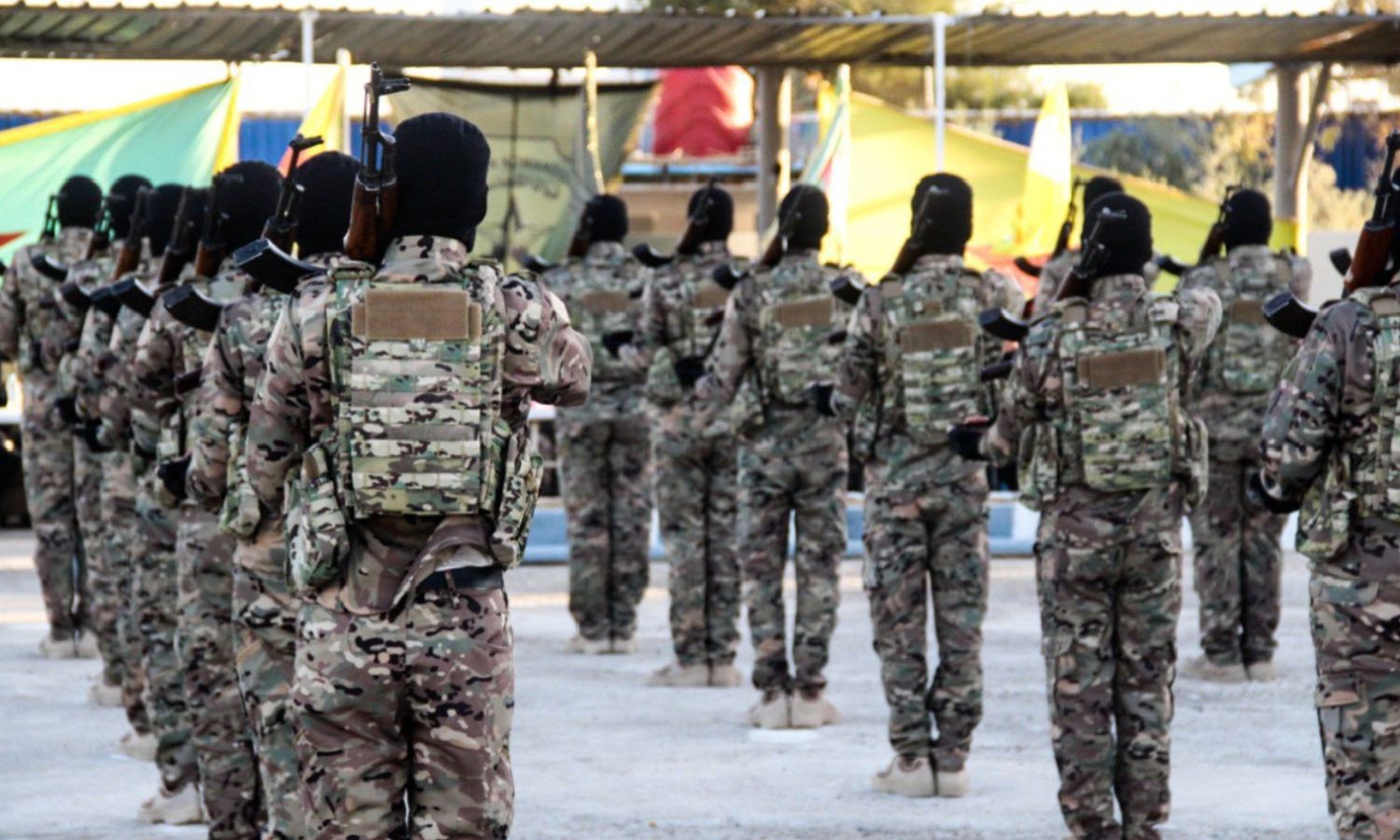
Negotiations between the Damascus government and the Syrian Democratic Forces (SDF) remain a protracted process. Since the March 10 agreement between Syria’s transitional president, Ahmed al-Sharaa, and SDF commander Mazloum Abdi, the deal’s provisions have stalled, with ongoing meetings seeking a political settlement to implement it. International efforts continue to push for the agreement’s completion and for integrating the SDF into the Syrian state.
Both sides express willingness to pursue a political track rather than military confrontation, despite differences over final demands. They emphasize the importance of dialogue, negotiation, and understanding to secure their rights and implement the agreement.
During his meeting with Arab media on August 24, President al-Sharaa addressed the situation in northeastern Syria, describing the March 10 agreement with Abdi as the foundation for any future dialogue, noting that it enjoys both domestic and international backing. He also pointed to “international mediation” around the deal, stating, “We are moving toward understanding.”
Meanwhile, Sanharib Barsoum, a member of the Autonomous Administration’s negotiating delegation, confirmed that talks with Damascus had stalled after the Syrian government rejected plans to hold a new round in Paris. Speaking to Rudaw on August 22, Barsoum explained that the Paris round was canceled without a new date set, and they are still awaiting Damascus’ response on time and location.
He added that while the March 10 agreement may extend until the end of the year, delays risk obstructing its implementation. However, extending negotiations by a few months is not critical as long as talks ultimately produce solutions beneficial to Syrians.
The government suspended negotiations with the SDF in response to the “Unity of Position for Northeastern Syria” conference, which had been scheduled to precede the Paris meeting.
Between Implementation and “Internationalization”
Recent statements from both sides, whether from al-Sharaa or Barsoum, stress a shared preference for diplomacy and dialogue, even if progress is slow.
Political analyst Abbas Sharifa told Enab Baladi that Damascus seeks to implement the March 10 agreement within a clear negotiating framework and timeline, while the SDF is trying to “internationalize” the issue, making it a global matter that draws in external stakeholders and resets the terms of negotiation.
Sharifa, who aligns with the government’s position, argued that the talks are slow for two reasons: the involvement of numerous international actors complicating the file, compounded by events in Syria’s coast and Suwayda (southern Syria) that affect negotiations; and the complexity of the details to be resolved, which necessitates patience to avoid conflict.
Consensus on Dialogue
Nawaf Khalil, director of the Kurdish Center for Studies, also told Enab Baladi that al-Sharaa’s statement is significant, particularly his emphasis that everything is negotiable except separation. This, Khalil noted, aligns with the SDF, as Kurdish parties historically have not demanded independence.
He stressed that Kurdish parties agree the solution lies in Damascus, through dialogue with the transitional government. Abdi himself previously said Syria will remain one state.
Khalil highlighted a gap between al-Sharaa’s positive rhetoric and the contradictory messaging of his official media team, which often resorts to hate speech and disinformation. Nonetheless, he argued that across the spectrum, from the Autonomous Administration (Kurds, Arabs, and Syriacs) to the SDF and Kurdish parties, there is a strategic consensus to resolve all matters through dialogue with Damascus.
The central negotiating issue remains the SDF’s integration into the Syrian government. Khalil noted that while al-Sharaa announced the integration of certain factions, these groups were not psychologically or politically prepared, and remain independent actors, particularly in Afrin and other regions.
He attributed delays in reaching a settlement to the deal’s strategic importance, which requires extended negotiations to craft an appropriate framework for full implementation, not just of its third clause, but of all its provisions.
While progress is slow, Khalil viewed this positively, emphasizing that the real question is whether Damascus is genuinely committed to implementing the deal. Despite the constitutional declaration issued after the agreement undermining its provisions, the SDF and the Autonomous Administration remain committed.
Fear of a Suwayda Repeat
Analysts have linked Damascus’ push for the agreement’s implementation and political dialogue to its desire to avoid repeating the scenario in Suwayda, where clashes between the government, Bedouin tribes, and local factions escalated into violence.
Sharifa explained that Damascus avoids military escalation in order not to lose international support, instead allowing time for negotiations to maintain momentum and global backing.
Khalil similarly argued that neither side benefits from a military option, making it an unlikely path.
In Suwayda, tensions erupted after mutual kidnappings between local factions and residents of al-Maqous neighborhood, home to a Bedouin majority, on July 12. These escalated into armed clashes that drew in government forces. Damascus later withdrew after Israeli strikes hit its positions in Suwayda and Damascus. Local factions retaliated against Bedouin communities, fueling tribal anger and prompting Bedouin convoys to mobilize toward Suwayda.
On August 16, demonstrations in al-Karama Square in Suwayda city called for “self-determination” and raised Israeli flags.
States with Competing Roles
International actors remain central to the talks, though their roles diverge. A French–Turkish rivalry complicates U.S.-led mediation between Damascus and the SDF. France shows strong support for the SDF, including hosting recent meetings and planning the canceled Paris round. Turkey, by contrast, backs Damascus.
The U.S., through its envoy to Syria, Tom Barack, seeks to mediate political integration and agreement implementation, underscoring Washington’s interest in bringing both sides closer.
According to Khalil, while France has engaged with Damascus, receiving al-Sharaa and his foreign minister, Asaad al-Shibani, its ties with the Autonomous Administration precede those with the transitional government. Paris, therefore, could still play a positive role alongside Washington.
He added that Turkey’s stance is shifting. President Recep Tayyip Erdoğan recently said Turkey guarantees Kurdish rights even in Syria. While Ankara’s position remains unclear, ongoing talks with PKK leader Abdullah Öcalan and the Democratic Equality Party may signal a gradual opening toward improved relations with northeastern Syria.
Divergent Agendas
Sharifa maintained that all sides want to preserve the agreement and political process, but the SDF seeks to internationalize the issue, extending negotiations indefinitely.
He argued that Turkey, aligned with Damascus, supports implementing the deal to end what it sees as separatist threats in northeastern Syria. France, meanwhile, is attempting to shield the SDF should U.S. forces withdraw, while Washington aims to secure the agreement to enable a managed pullout.
This divergence of agendas among global and regional powers shapes the dynamics of their involvement. Sharifa suggested Damascus opposes internationalizing the file into a regional tug-of-war, particularly between Turkey and France.
He also noted U.S. pressure on the SDF to comply with the agreement’s terms and begin implementing provisions with Damascus, potentially paving the way toward a comprehensive and lasting settlement.
What Is the Agreement?
On March 10, transitional president Ahmed al-Sharaa and Mazloum Abdi agreed to guarantee all Syrians equal political representation and participation in state institutions based on merit, regardless of religious or ethnic background.
The deal also called for a nationwide ceasefire and the integration of northeastern Syria’s civilian and military institutions, including border crossings and oil and gas fields, into the Syrian state’s administration.
The post A long-term approach dominates the dialogue between Damascus and the SDF. appeared first on Enab Baladi.