
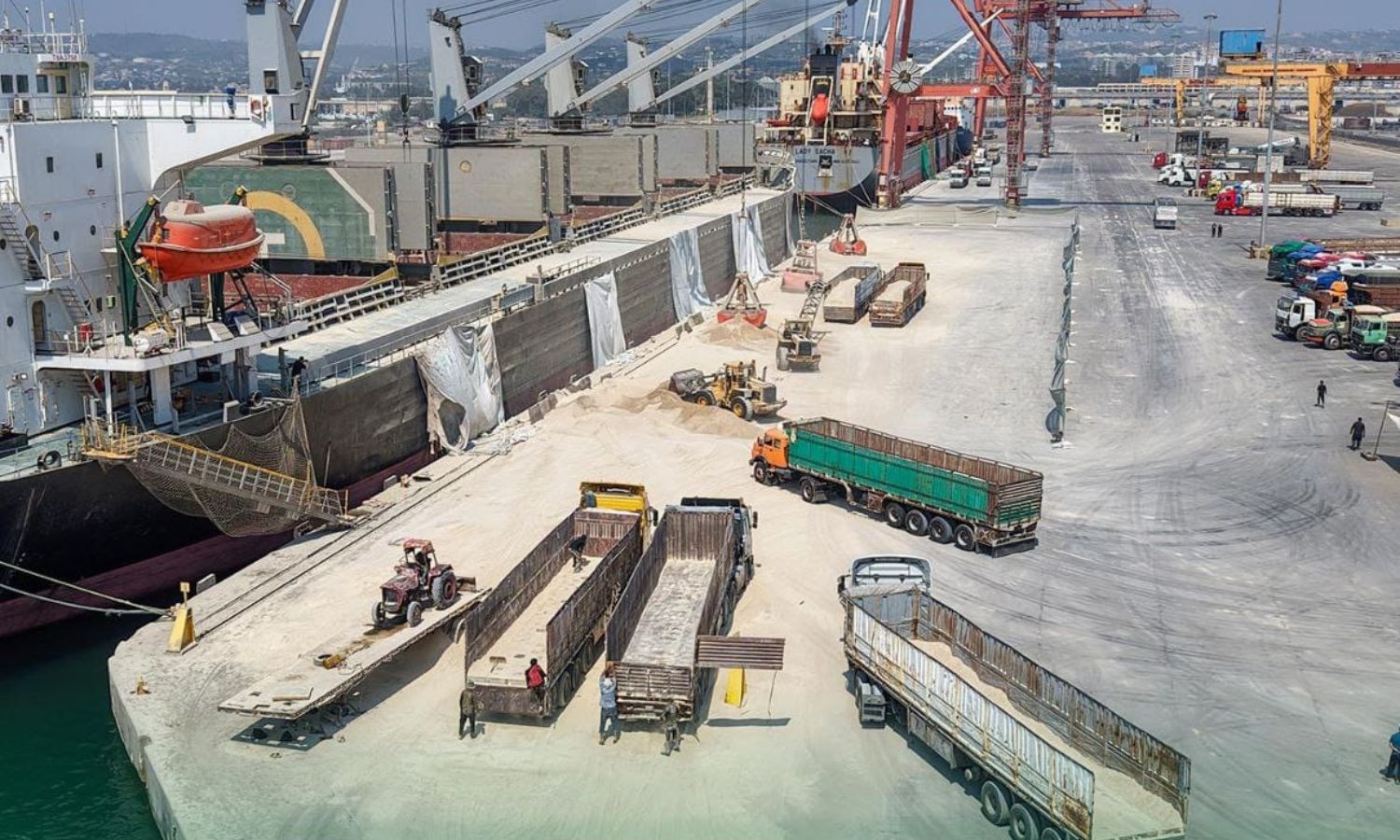
Syria is aiming to transform its ports into an active corridor in the Eastern Mediterranean following foreign investments. Toward this goal, it has begun exchanging expertise with Turkey.
To enhance cooperation in maritime transport and port development, a Syrian delegation from the General Authority for Land and Sea Ports conducted an official visit to Turkey at the end of July. During the visit, both sides agreed to sign a preliminary memorandum of understanding on staff training, maritime legislation development, and re-establishing Syria’s presence in international maritime organizations and forums.
The delegation, led by Deputy Head of the Authority Ahmed Mustafa, discussed institutional cooperation opportunities between the Syrian Ministry of Transport and its Turkish counterpart in the fields of maritime transport and port management.
They also explored infrastructure development strategies for ports, the possibility of leveraging the Turkish experience in operation and administration, and reviewed modern digital port management systems—most notably the Port Community System and Vessel Traffic Services—and the potential for implementing these technologies in Syrian ports.
In addition, the visit covered the exchange of expertise and the training of technical and administrative staff in the maritime transport sector through training programs and university-level cooperation.
The Syrian delegation visited development and expansion projects at Mersin Port and discussed mechanisms for financing and implementing similar projects in Syria.
An Active Maritime Corridor
Mazen Alloush, Director of Public Relations at the General Authority for Land and Sea Ports, told Enab Baladi that linking Syrian ports—especially Tartus Port, operated in partnership with DP World—with regional ports such as Mersin International Port is a key strategic objective for the authority, aimed at enhancing Syria’s role as an active maritime corridor in the Eastern Mediterranean.
Alloush added that the delegation’s visit to Turkey included discussions on opportunities for logistical integration between Syrian and Turkish ports, as well as ways to benefit from Mersin’s experience in infrastructure management and expansion.
This approach will be formalized in the upcoming Memorandum of Understanding, which will outline the foundations of technical and commercial cooperation and encourage the exchange of data and expertise between both parties. The aim is to strengthen regional supply chains and support existing projects at Tartus Port in partnership with DP World, according to Alloush.
He also emphasized that developing the maritime legislative environment is a fundamental pillar of the reform program currently underway by the General Authority for Land and Sea Ports.
During the meetings, participants reviewed port management legislation, regulations governing operating companies, maritime safety rules, and frameworks related to the Port Community System.
Several Syrian laws and regulations are set to be reviewed and updated, including:
-
The Maritime Ports Law
-
Licensing systems for operating companies
-
Maritime safety and rescue instructions, and associated frameworks for the Port Community System
These updates aim to align with international standards, facilitate integration into global digital and commercial networks, and enhance the competitiveness of Syrian ports.
Future Plans
Alloush added that restoring Syria’s presence in regional and international maritime organizations is a national priority in the coming phase. During its meetings with Turkish counterparts, the delegation discussed potential support from friendly countries in this regard.
According to Alloush, the General Authority for Land and Sea Ports will focus on the following goals:
-
Improving Syria’s technical and legal representation at meetings of the International Maritime Organization (IMO) and other regional maritime bodies
-
Training and qualifying staff according to international maritime standards
-
Re-establishing Syria’s participation in international databases concerning transportation, safety, and port management
-
Benefiting from Turkey’s experience in engaging with these organizations, including ship registration procedures and navigation certifications
Alloush expressed hope that these efforts would help Syria regain its influential role in shaping international maritime policy and enable its ports to benefit from financing and cooperation opportunities through relevant UN frameworks.
Previous Agreements
On 14 July, the General Authority for Land and Sea Ports signed an agreement with DP World to invest in Tartus Port, aiming to enhance port infrastructure and logistics in Syria.
Adnan Haj Omar, Director General of Ports, told Enab Baladi that the agreement is a concession contract granting the company the right to manage and operate Tartus Port for 30 years.
The company is required to submit an operational system within six months of taking over, subject to approval by the General Authority, with investment reaching up to $800 million.
Additionally, on 1 May, the Authority signed another agreement with the French company “CMA CGM” to manage the container terminal at Latakia Port.
According to Ahmad Ali Mustafa, Director of the Port, the agreement spans 30 years, during which the company will invest €230 million.
The post Syria Aspires to Become an Active Maritime Corridor .. Starting with Turkey appeared first on Enab Baladi.