
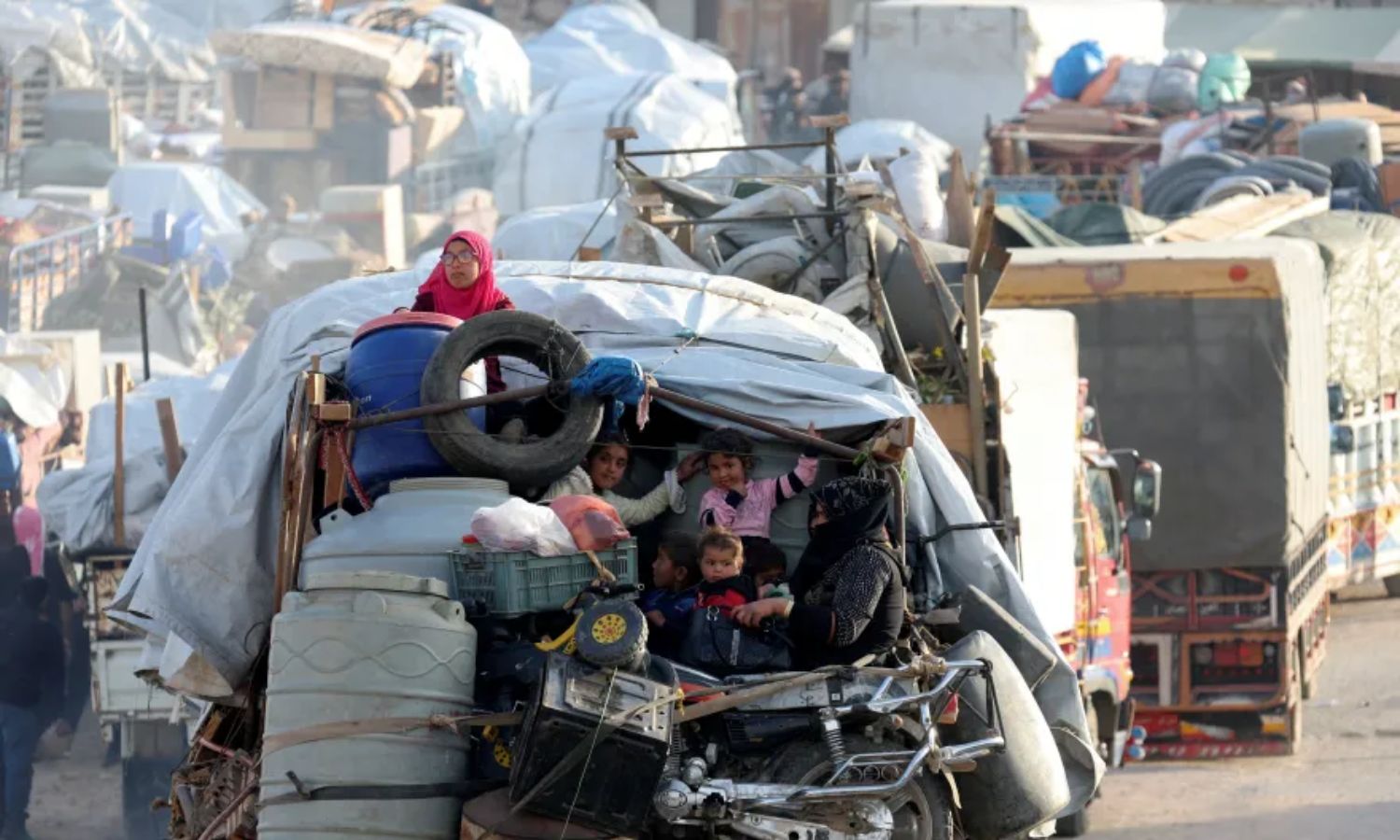
The Access Center for Human Rights (ACHR) has documented what it describes as a “notable surge” in violations against Syrian refugees by Lebanese authorities, coinciding with the announcement of the “voluntary return” plan for Syrians residing in Lebanon.
In a statement published on its official website on Friday, August 1, the center stated that the measures being taken against Syrians are creating an unsafe environment, lacking even the minimum standards of dignified living.
Systematic Violations
According to the statement, violations include: forced deportation, mass arrests, forced evictions, security raids, and an escalation in inflammatory rhetoric against refugees.
ACHR added that Lebanese authorities have intensified raids and arrests since the implementation of the “voluntary return” plan, along with issuing eviction orders for refugee camps.
On July 10, 2025, the Litani River Authority issued 34 eviction orders targeting camps along the riverbanks, threatening the shelter of approximately 2,500 refugees, most of whom are women and children.
The report noted that seven out of every eight affected refugees lack alternative housing options.
Raids and Mass Arrests
ACHR documented that the Lebanese army carried out at least 13 raids in the first half of July, resulting in the arrest of more than 666 Syrian refugees, on charges related to illegal entry or lack of official documents.
In a concerning development, Syrian youth Suleiman Ahmad Qarqamas died just three hours after his arrest by Lebanese General Security forces, following a raid on his home in the Bir Hassan area of Beirut on July 29.
Qarqamas, originally from al-Mleiha in rural Daraa, worked in Lebanon as public service (shared taxi) driver, according to his family.
His family said he was taken without a warrant, and his body was returned bearing clear signs of torture.
This incident is one among several documented violations against Syrian refugees in Lebanon. Daily raids continue in areas such as the southern suburbs of Beirut and the Bekaa Valley, amid accusations of abuse, unlawful detention, and forced deportation.
Human rights sources indicated that interrogations often involve sectarian-based questioning, and that release decisions are sometimes made based on sectarian background—what rights groups describe as systematic discrimination and a violation of international human rights standards.
“Voluntary Return” Under Coercion
There are growing fears that what is being labeled “voluntary return” is taking place in a coercive environment, lacking legal guarantees, while arrests, torture, and pressure to leave continue.
ACHR cited eyewitnesses reporting “serious violations of dignity and privacy” during raids, with 50 to 60 armed personnel involved, including instances of physical violence and preventing women from dressing before being taken from their homes.
These surrounding circumstances make the return closer to forced return than truly voluntary, amid increasing arbitrary practices and lack of legal and humanitarian guarantees for Syrian refugees in Lebanon.
Unsafe Conditions in Syria
Despite the fall of the Assad regime, long seen by refugees as a barrier to return, current security conditions inside Syria remain a driving factor for continued displacement, especially for Syrians in Lebanon.
Concerns have mounted following recent unrest in Suwayda and the coastal region, raising doubts about security and stability within Syria.
According to Enab Baladi, Syrian refugees in Lebanon have expressed fears about returning, demanding UN guarantees for their safety and calling for more time, due to lack of homes to return to and ongoing instability.
Beyond security issues, Syria also faces severe structural challenges that compromise public safety, including:
-
Ongoing internal displacement in several provinces.
-
Widespread destruction of infrastructure and housing.
-
Unexploded ordnance that renders many areas uninhabitable.
What Is the Voluntary Return Program?
The UNHCR launched the “Voluntary Self-Organized Return” program on July 1, set to run for three months. It aims to support registered Syrian refugees in Lebanon who choose to return to Syria permanently and voluntarily.
The program offers each returning family member a one-time financial grant of $100, intended to help cover the cost of returning through official border crossings. UNHCR also provides guidance on exit procedures, required documents, and tips for preparing for return.
However, despite this support, conditions remain extremely difficult due to the lack of essential services, persistent security threats, and the collapse of infrastructure in Syria.
Lebanon currently hosts over 1.5 million Syrian refugees, more than 750,000 of whom are registered with the United Nations. Most fled the Assad regime’s repression following the 2011 uprising.
UNHCR data shows that the refugee crisis remains critical. A 2020 assessment revealed that about 90% of Syrian refugee families in Lebanon live in extreme poverty, exacerbating the hardships they face—whether they choose to stay or return.
The post Violations Against Syrian Refugees in Lebanon Escalate appeared first on Enab Baladi.