
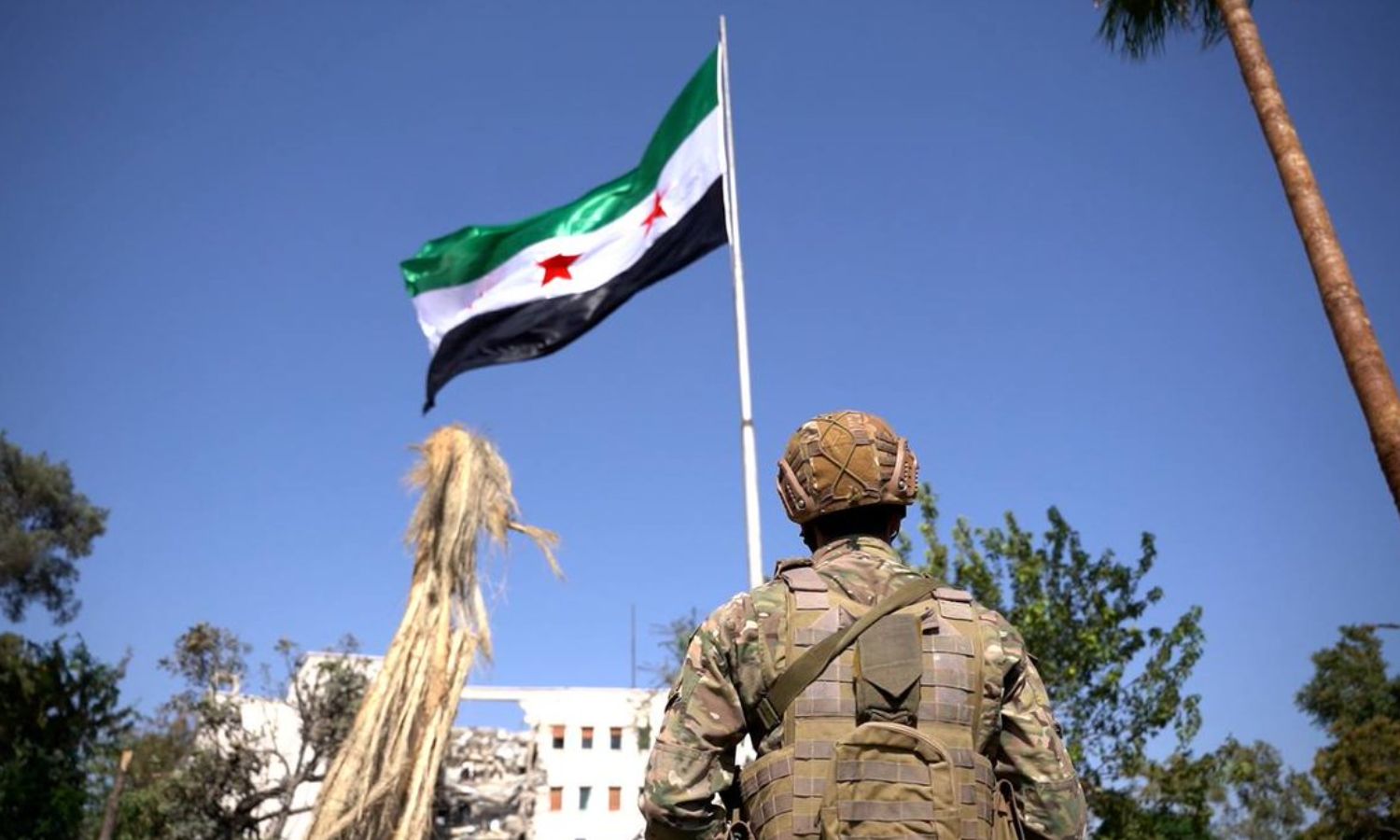

Syrian President Ahmad al-Sharaa and Foreign Minister Asaad al-Shibani
Local Administration Between Intent and Legal Framework
Maan Talaa pointed to positive signs in the government’s direction toward local administration, as reflected in the level of engagement and discussion surrounding issues of administrative organization and provincial authorities.
Conversely, he explained that this direction remains conditional on a legal framework awaiting the formation of a legislative council capable of enacting the required legislation.
Although this shift is not easy, Talaa believes there are features of a positive general orientation that must be seized and built upon—provided it occurs within a coherent institutional vision.
Talaa stresses that participation is not a model to be imported or merely a set of technical steps; rather, it is a philosophical and methodological framework that the state must adopt to redefine its relationship with society. It is based on three pillars: balanced cooperation, mutual interests, and shared responsibility.
He believes that participation should serve as a flexible gateway for the state’s response to post-conflict challenges by promoting stability and legitimizing political and administrative presence. This requires genuine community involvement in planning, implementation, evaluation, and accountability—far from traditional sectarian or ethnic representation tools—in favor of modern civil and political mechanisms.
He noted that achieving this requires cumulative steps, including amending laws and the constitution, empowering local authorities, strengthening balanced partnerships between the state, civil society, and the private sector, in addition to developing accurate monitoring indicators, a technological infrastructure, and effective community listening policies.
“The culture of participation requires work on two levels: within the authority to develop practical understanding, and within society to eliminate fears and narrow identities, and to adopt a civil political culture.”
Maan Talaa,Director of Research and Policy at the Omran Center for Strategic Studies
State Identity… The Core of the Syrian Dispute
Dr. Samir al-Taqi, founder and general director of the Orient Research Center (ORC), believes that the main issue Syrians disagree on is the “identity of the state” and the role each component of society feels it plays within it. He emphasized that Syria is not a collection of “religious sheikhdoms” ruled by sectarian leaders as in Ottoman times—Syrians have moved beyond that phase both culturally and civilizationally.
He noted that the current authority has not yet declared its acceptance of the idea of democracy. It is considered “heresy” in some textbooks previously used in areas controlled by Hayat Tahrir al-Sham, based on the principle of “sovereignty belongs to God,” which means that authority is granted to religious clerics, not the people. This, he says, is not easily overcome.
Al-Taqi affirms that symbolic democracy does not guarantee protection for communities. The proof is that minorities do not consider mere equality sufficient to secure their rights. Hence, he believes that true negotiation over identity and the state is essential for everyone’s continued existence.
Political Participation is the process of involving citizens, qualified individuals, and community elites in political decision-making—either directly or indirectly, through various activities and mechanisms aimed at influencing the government and the decision-making process.
Political participation includes:
-
-
Involving citizens in the political process, which in turn promotes political stability and reduces the likelihood of conflict.
-
The right to participate in elections.
-
Engagement in political parties and civil society organizations that aim to influence public policy.
-
Addressing government officials and representatives to express opinions and demands.
-
Participating in public political dialogues and discussions.
-

Religious figures shaking hands with transitional Syrian President Ahmad al-Sharaa – Feb. 25, 2025 (Syrian National Dialogue Conference)
The People’s Assembly…
Appointed, Not Elected
Dr. Samir al-Taqi rejects the current form of the Syrian People’s Assembly under the presidential system, believing it will be merely symbolic—akin to Iran’s “Expediency Discernment Council”—with no role in holding the president accountable or formulating the state’s strategic plans.
He argues, “The real ruler is not the people, but organizations such as Hayat Tahrir al-Sham, which manage strategic affairs beyond any oversight or national representation.”
“We must begin by changing the mentality of favoritism, which poses a great danger to the state’s future. Today, key positions are granted only to those trusted by HTS—whether in its political or military arms—while the rest are assigned ceremonial roles. Fundamental and strategic issues, such as the country’s future and relations with Israel, are not discussed in parliament or within a broad political body representing diverse factions, but are decided in a narrow circle loyal only to HTS.”
Dr. Samir al-Taqi, ORC Director
Election Committee Explains Participation
Nawar Najmeh, spokesperson for the Supreme Committee for People’s Assembly Elections, told Enab Baladi that the committee is conducting consultative meetings both at the governorate level and within the People’s Assembly headquarters. The main goal is to involve as many citizens and national stakeholders as possible in formulating a suitable and transparent mechanism for selecting assembly members.
Najmeh revealed that the temporary electoral system will be issued in the coming days and will include details of this mechanism and the procedures for selecting members. He added that the committee has ensured that various opinions, proposals, and recommendations contribute to crafting this mechanism.
He said the electorate will be composed of different segments of the Syrian people and will rely mainly on population representation based on 2011 statistics from different areas. He stressed that selection will prioritize competence—not quotas—and the mechanism will include civil society and national stakeholders.
Due to the absence of an effective law, the process will not be based on party lists but will involve individuals from various social and national backgrounds.
Najmeh emphasized that the principle of equal opportunity among all citizens will be strongly upheld in forming the electoral bodies, which will account for population representation across all Syrian governorates, without discrimination between areas formerly under regime control and previously liberated areas.
Regarding the security situation in certain regions like As-Suwayda, Raqqa, and Al-Hasakah, Najmeh disclosed that alternative mechanisms will be used in case elections cannot be conducted directly in those areas.
As for guarantees provided to Syrians, the committee affirms its full commitment to ensuring transparency and efficiency, so that the next People’s Assembly will be fundamentally different from what it was under the previous regime, according to the committee’s spokesperson.
He expressed hope that the new parliament will be a true legislative authority, fully playing its national role and contributing to drafting the necessary laws and legislation for the upcoming phase.
Elections Start Locally and End in Parliament
Dr. Samir al-Taqi proposes that the electoral process begin at the grassroots level—like in many countries that have emerged from civil wars—through local, professional, and union elections, eventually progressing to a bicameral parliament (House of Representatives and Senate). He considers the Senate necessary to ensure minority rights and maintain national unity through broad powers for the provinces—including the “right to political divorce” if needed.
He believes that the parliamentary system is more suitable for Syria, as the presidential system does not align with the country’s pluralism or the large segment of Syrians who do not identify religiously or sectarianly, but through their civil and national identity. He sees that the civil culture in cities is incompatible with the religious culture currently imposed through curricula and the destruction of cultural symbols.
For his part, legal expert Abdul Nasser Houshan noted that holding elections in Syria is infeasible due to the displacement or absence of more than half the population. He also highlighted prior manipulation of civil registry data through the naturalization of foreigners and the inability of millions of Syrians to register vital events.

The first press conference of the People’s Assembly Electoral Committee – June 18, 2025 (Electoral Committee/Facebook)
The Constitutional Declaration and the National Dialogue Conference…
A Hastily Approved Roadmap
The absence of participation in the public policy of leading the transitional phase revealed a “defined weakness” in the overall state institutions, as improvisation dominated decision-making on both internal and external levels, according to political thought researcher Abdullah al-Turkmani
Since the “Victory Conference” and the slogan “He who liberates decides,” which was echoed by defenders of the authority’s choices, what followed were “fatal” mistakes, represented in hastily arranging a symbolic national conference, issuing a constitutional declaration tailored to the “de facto authority,” and rebuilding the army and security apparatus on foundations of loyalty rather than professionalism and national merit, the researcher added.
After a Constitutional Vacuum
The “Victory Conference,” held by the “Military Operations Administration” on January 29, suspended the constitution that was in effect under the former regime, dissolved the People’s Assembly, abolished political parties and the constitutional court, resulting in a constitutional vacuum.
This vacuum was filled by the new government through a temporary constitutional declaration approved on March 13. It comprised four chapters and transformed the system of governance into a presidential one.
Despite its provisional nature, which set the term of governance to five years, the declaration was not spared criticism from legal and political experts, who accused it of concentrating powers in the hands of the president and excluding political, ethnic, and religious components.
Between Two Opinions
Legal expert Ghazwan Qrunful stated that the government’s option from the very beginning was to seize and monopolize power while excluding various spectrums, currents, and parties from the Syrian political scene, claiming the right to decide based on being the “liberating force,” in line with the slogan “He who liberates decides.”
In his remarks to Enab Baladi, he added that the constitutional declaration came as a “blunt” expression of that exclusionary policy and a rejection of any form of national partnership in shaping the features of the new Syria.
The concentration of all power and tools in the hands of the president was, according to him, a “glaring” expression of that policy. He is the President of the Republic, Commander of the Army, Head of the Government—which is not held accountable for its actions—creator and sole elector of the legislative council, Head of the Higher Judicial Council, and has the final say in appointing members of the constitutional court, making him, essentially, the “absolute ruler of Syria.”
Under such circumstances, talk of partnership is merely a “distasteful joke.”
“As for the Dialogue Conference and the “electoral carnivals” held in the provinces in preparation for selecting and appointing members of the legislative council—devoid of authority to monitor or hold the government accountable—these can only be considered “symbolic measures” to obscure reality.”
Ghazwan Qrunful, Syrian legal expert
He considered that this exclusionary approach would not help resolve the national deadlock but would rather complicate it further and lead Syria and its people into dangers the country can no longer bear.
Conditions for Partnership Are Absent
On the other hand, legal expert Abdel Nasser Hoshan does not believe that the articles of the constitutional declaration contain exclusion, arguing that it is instead a reorganization of the constitutional and legal foundation to activate political participation mechanisms.
According to Hoshan, political participation must have legal frameworks, as it implies the participation of parties and political movements in governance. Therefore, a law for parties and elections must exist within a permanent constitution.
He pointed to parties that existed during the former regime, such as those in the “Progressive Front” and the “Ba’ath Party,” stating that they all participated in shedding Syrian blood and were complicit in the crimes committed by the former Syrian regime.
It Entrenches Centralization
The constitutional declaration entrenches the principle of political centralization, which led some parties—particularly those advocating for decentralization or federalism in areas such as northeastern Syria and Suwayda—to reject it.
Hoshan supports the principle of centralization in the post-war period, noting that Syria is not alone in taking this position. He explained that countries emerging from war usually have weak political and social structures due to the presence of armed militias.
He tied the strength of the state to the enforcement of constitutional and legal sovereignty, affirming that security and stability require the central government to possess supreme authority and a monopoly over arms.
“Political decentralization is not a solution; it is a gateway to civil war, administrative decentralization, however, is a type of governance model. I believe that work is being done toward this model through the restructuring and reform of institutions and local administration.”
Amendments to the Local Administration Law may follow.
Abdel Nasser Hoshan,
Syrian legal expert
Founder and General Director of the Orient Research Center (ORC), Dr. Samir al-Taqi, believes that the central dispute revolves around the constitutional declaration, which was designed for a presidential system following a bitter civil war, placing actual governance in the hands of the now-dissolved Hayat Tahrir al-Sham and its political and military bodies—even though it lacks broad Syrian consensus. He argued that this form of “Salafi-jihadi Islam,” as he called it, does not reflect the identity of all Syrians.
Al-Taqi added that a study of 35 civil wars since World War II shows that the state model is usually a consensual parliamentary system that adopts a high degree of decentralization once conflicts end. He stressed that such conflicts do not conclude until the logic of dominance is abolished and the notion of “he who liberates governs” is rejected. Continuing this approach, he warned, will keep the “embers under the ashes,” leading to repeated flare-ups due to some parties feeling marginalized, wronged, and excluded from reshaping Syria’s identity.
Political Concept or Administrative Option?
Maan Talaa, Director of Research and Policy at the Omran Center for Strategic Studies, told Enab Baladi that the debate over centralization and decentralization in Syria is governed by major misunderstandings and tensions—not just from the government, but from all parties.
He stressed that absolute centralization does not necessarily mean full control over all decision-making details, nor is it the sole guarantee of the country’s unity.
He argued that national unity is not built through central control, but through a balanced social contract that combines a strong center with empowered peripheries. This understanding is often absent due to the political sensitivities surrounding the concepts of centralization and decentralization, which make any discussion of power distribution emotionally charged and irrational.
He emphasized the need today for a mature Local Administration Law that takes into account the reality of the Syrian state and clearly defines which powers can be delegated and which sovereign powers must remain exclusively with the center, such as defense and foreign policy.
Paving the Way for a New Constitution
The importance of political participation, according to political writer Darwish Khalifa, lies in building legislative and executive institutions that represent all Syrians, collectively reshaping political decision-making, and enabling the emergence of new elites from all components to contribute to rebuilding the country and laying the groundwork for a new constitution that enshrines the inclusive concept of the state.
He believed that what is needed today is not the exchange of accusations, but a national project that reconnects the state with society and establishes a new social contract that transcends the duality of security and sectarianism toward a state of citizenship and rights.

A discussion session during one of the National Dialogue Conference groups – February 25, 2025 (Enab Baladi)
Calls for a New National Conference
After several days of preparation, during which the preparatory committee toured Syrian provinces, the “National Dialogue” conference was launched on February 24, with the participation of more than 600 Syrian figures.
The conference received praise from several attendees, but also faced criticism—some from participants and others from outside observers—mainly regarding its two-day duration, the short notice for invitations (sent only 48 hours in advance), and criticism of its outcomes.
Political researcher Dr. Nader al-Khalil believes the main errors before the conference were the lack of transparency in forming the preparatory committee, which raised doubts about its intentions and representativeness.
He also pointed to the exclusion of active political and societal forces, which undermined the representative legitimacy of the conference, in addition to relying on a “mobilization” discourse instead of a foundational one, making the preparation appear more like a “public relations campaign.”
Regarding the outcomes, al-Khalil sees several faults: the absence of clear implementation mechanisms for agreed-upon items, rendering them mere declarations of intent.
He also noted the prioritization of factional interests over national ones, where the outcomes were used to strengthen the positions of certain parties, and the failure to build trust among participants, which further deepened polarization in some cases.
Calls for a New National Conference
Following Syria’s political and societal crisis after the events in Suwayda, and earlier in the coastal region, as well as political and security incidents across various areas and sectors, calls for a new national dialogue conference have resurfaced. Among the most prominent advocates were the signatories of the “Syrian Centennial” initiative.
Despite recurring talk of national dialogue, al-Khalil argues that most initiatives lacked the minimum requirements for genuine representation and were largely symbolic, instrumental, or superficial.
He attributes this to several factors. The first is the erosion of trust among political actors—between the opposition and the current authority, as well as within their own ranks—making any rapprochement attempts appear superficial or doomed to fail.
The second factor is the growing influence of external actors, where political participation has become largely dependent on regional and international agendas, stripping it of national independence and legitimacy.
The third factor, according to al-Khalil, is the weakness of intermediary institutions such as parties, unions, and civil society, which should serve as bridges for participation but are either marginalized, infiltrated, unqualified, or absent.
What the Next National Conference Should Be
Nader al-Khalil
Syrian Political Researcher
Given the Syrian context, there is a pressing need for a “genuine national conference,” not as a ceremonial or media event, but as a founding platform for rebuilding a new Syrian social contract.
This conference should be:
-
-
Inclusive: Involving representatives of all political and social components, including internal and external opposition forces, civil society, unions, and economic and religious stakeholders.
-
Neutral: Managed by an independent committee trusted by all, free from official, partisan, or factional dominance.
-
Foundational: Aiming to establish a clear roadmap toward a genuine, gradual political transition that ensures participation and rebuilds institutions on democratic foundations.
-
If a new national dialogue conference is to be held, its optimal form must be foundational rather than consultative, with the primary goal of reshaping the relationship between the state and society based on inclusive and comprehensive principles.
The new conference should be based on:
-
-
Genuine representation of all political and social forces, including those previously excluded.
-
Independent administration by widely trusted national figures, avoiding polarization and “factional” mindsets.
-
A clear agenda covering local governance, transitional justice, constitutional reform, and institutional rebuilding.
-
Arab and international guarantees to ensure the implementation of its outcomes, without turning into guardianship.
-
Its goals as a comprehensive national conference:
-
-
To serve as a turning point in Syria’s political trajectory and lay the foundation for a new phase of genuine, not symbolic, participation—restoring the citizen’s role as a partner rather than a follower, and politics as a tool for construction, not conflict.
-
To ensure that the dialogue is open and ongoing, even if it lasts for months (as Syria’s founding national dialogue over a century ago lasted about six months).
-
During the dialogue period, the transitional government’s role should be genuinely transitional, refraining from making foundational decisions about Syria’s future unilaterally until conditions allow for the election of a representative body capable of shaping Syria’s future based on broad legitimacy.
-
The current stage requires a shift from the logic of “revolution” to that of “state,” and from “factionalism” to “a national army institution,” as continued factionalism—even under local or sectarian slogans—threatens national unity and obstructs any inclusive national project. A stable state cannot be built without the legitimate monopoly of force and unified security and military institutions under the authority of a unified Syrian state representing all components.
Syria needs a comprehensive national approach that guarantees rights, respects particularities, and rejects chaos and weapons outside the state framework. This requires sincere national dialogue, moving beyond exclusionary rhetoric, and acknowledging that the next phase must be one of construction, not score-settling, and one of inclusive national partnership among all components of the Syrian state without exception.
After the Events in Suwayda…
Participation Becomes a Core Demand
Amid ongoing crises, political circles believe Syria now requires the inclusion of elites, qualified individuals, and community representatives in the Syrian political approach, as an emergency attempt to contain tensions among all Syrians.
Writer and political thought researcher Dr. Abdullah al-Turkmani told Enab Baladi that Syrians suffered from a lack of representation for their pluralistic society under the previous “authoritarian” regime, and were hopeful for change, expecting the new regime to meet their aspirations for genuine political participation that guarantees equal and free citizenship during the political transition process.
He cited examples from countries that transitioned from authoritarianism to freedom and democracy, integrating all components into state institutions through political, social, and economic participation—thus preventing the emergence of sub-identities at the expense of the national identity.
In Syria, al-Turkmani believes that participation should have been the entry point to unify Syria’s ethnic, sectarian, and religious diversity, viewing it as a strength and added value, through a state of law and institutions that ensure justice and equality.
He noted that the events in the coastal region and Suwayda, which threatened civil peace, should alert the transitional leadership that a security-based approach to Syrian diversity will lead to catastrophe, while a political approach through participation opens horizons for progress and prosperity for all Syrians.
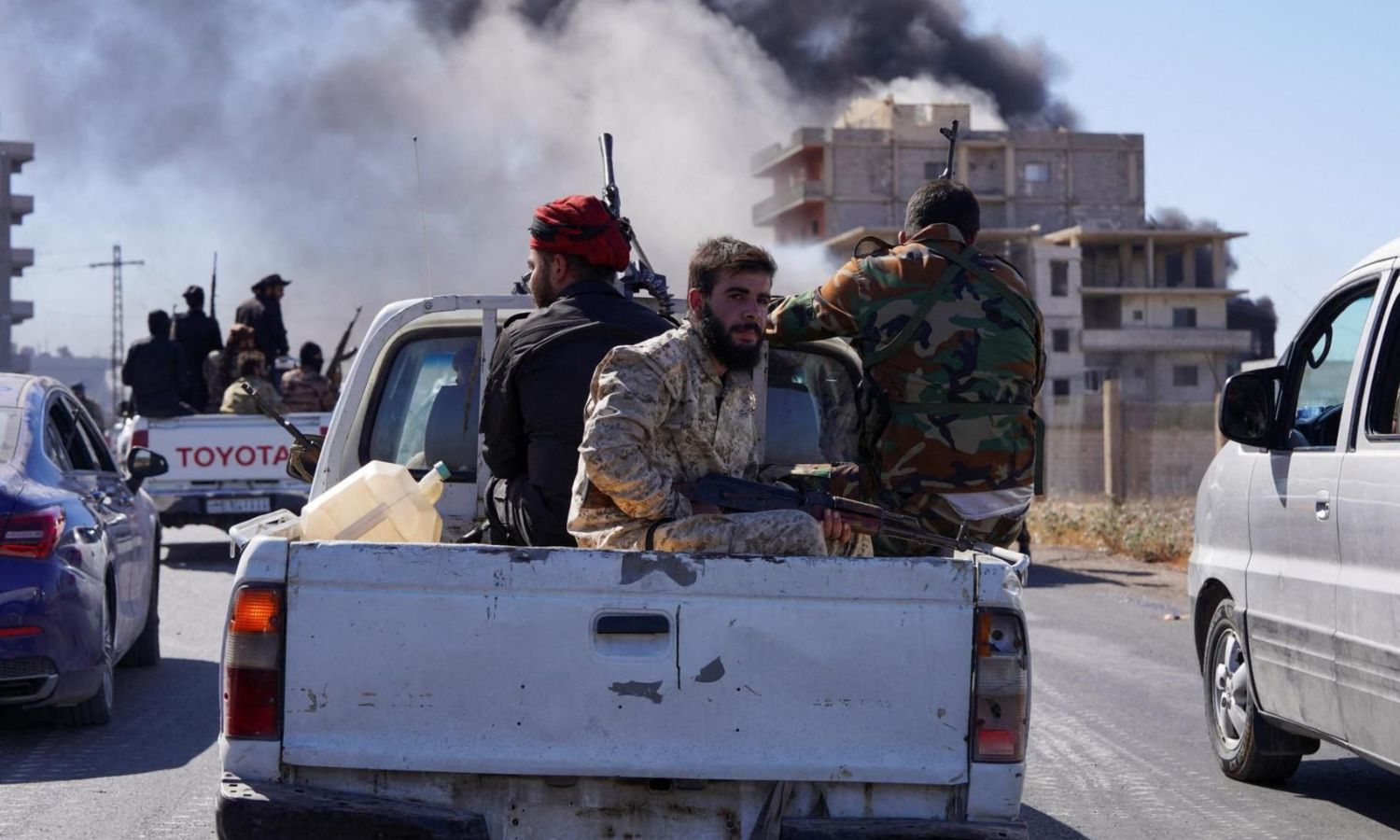
Smoke rises over the city of Suwayda as Syrian security forces enter the area – 15 July 2025 (Reuters/Karam al-Masri)
Almost Absent or Distorted
Political writer Darwish Khalifa agrees with al-Turkmani, telling Enab Baladi that political participation in Syria remains almost absent or distorted, with no inclusive political institutions representing all societal components and political entities. Even in areas outside government control, local governance models prevail, often monopolized by specific groups or subject to external influences.
He added that after the Suwayda events, which sent a clear message of rejecting marginalization and political monopoly, the need for participation became more urgent than ever. These events revealed a deep rift between the people and the ruling system and the refusal of components to remain mere spectators or victims.
According to him, the Suwayda events cannot be seen as a passing security incident but rather as a clear indicator of a deeper political crisis affecting the structure of the new Syrian state and highlighting the challenges in rebuilding trust between Syria’s components and the decision-making center in Damascus.
The Syrian Network for Human Rights documented the killing of at least 814 people and the injury of 903 others during the Suwayda events, which ignited on July 13 with clashes between local Suwayda factions and Bedouin tribes, prompting government forces to intervene.
The confrontations subsided on July 24 after widespread violations by local factions, tribal forces, and government forces.
The network’s toll includes civilian victims, including children, women, and medical personnel, in addition to fighters from armed Bedouin tribal groups, local fighters from the province, and members of the Internal Security Forces and Ministry of Defense.
Appointments “Monopolized”
Dr. Abdullah al-Turkmani believes political participation is not just a demand of minority components but concerns all Syrians. However, most appointments in state institutions are monopolized by the so-called “General Secretariat for Political Affairs,” overseen by the Minister of Foreign Affairs, which has come to act as a de facto ruling party.
The recent threats to civil peace in Suwayda, according to al-Turkmani, should prompt the transitional leadership to reconsider managing the state as a “spoils system,” dominated by loyalists from “Salafi-aligned brethren,” and instead move toward political and social participation and distributing power based on merit, integrity, and equal citizenship.
Impact Depends on Implementation
Politicians and researchers interviewed by Enab Baladi linked the strengthening of the current authority’s legitimacy, achieving a peaceful transition, and reducing armed military escalation to the adoption of political participation by the Syrian authority.
Al-Turkmani explained that the Assad regime transformed the state from a public space for all citizens into a private domain for loyalists to the security apparatus. Today, it is essential to present a new political vision for Syria, centered on key political questions—affirming the state’s neutrality regarding ideologies, religions, and parties, as it belongs to all segments of Syrian society—and engaging with citizenship and public and individual freedoms.
“Success in transitioning to a state of law and justice requires a break from the culture of slogans that has exhausted Syrians for six decades,” al-Turkmani said, stressing the need to focus on effectively addressing present challenges and planning for the future based on freedom, justice, and equal citizenship, secured by agreements among all intellectual and political currents under the inclusive Syrian national framework.
He believes that the success of the political transformation process depends on forming a broad “historic bloc” of active political forces to ensure the success of this path. Without a genuine national opposition to guide government behavior, restrain authoritarian tendencies, and help protect the country’s interests from internal and external threats, Syria’s fate remains “in the wind.”
Divergence in Defining Demands
Politicians differ in defining the demands for implementing political participation, but all agree on the need for genuine political will and a peaceful opposition to monitor and correct the government’s course.
Political thought researcher Abdullah al-Turkmani believes Syria will face numerous challenges during the transitional phase, necessitating the creation of diverse, quality political parties with youth and women as their social base and the nation’s best interest as their compass.
In this context, he said the Syrian opposition, in all its diversity, should seek advanced forms of mass public participation—especially from youth and women—in its peaceful activities to ensure the completion of the desired transformation.
A comprehensive participatory program could help break from past options that lacked real engagement with the present and future and open the way for all components of the Syrian people to launch new initiatives.
“The government must exert greater effort to open up to all components of the Syrian people,” al-Turkmani said, explaining that this should not be through statements and speeches but via a practical policy that abandons monopolization and security solutions, allowing for a genuine national dialogue. Such a dialogue could bring forth authentic, mature leadership from all components—not limited to traditional figures like sheikhs, tribal, or sectarian leaders—but including youth, intellectuals, and civil society, leading to a new social contract among Syrians.
According to him, implementing this would reinforce a cohesive national identity, provide genuine internal immunity, and block external interference—foremost among them, Israeli interference.
The post Political Participation… A Necessity for the Current Phase in Syria appeared first on Enab Baladi.